
Table of Contents
- Why Herbal Tea Works for Sleep and Relaxation
- Chamomile Tea for Sleep: The Most Studied Option
- Valerian Root Tea for Sleep: Stronger but Slower
- Lavender, Lemon Balm, and Passionflower: Other Calming Herbs
- Sleep Tea Ingredients: What to Look For and What to Avoid
- When to Drink Tea Before Bed for Best Results
- Matching the Right Tea to Your Sleep Concern
- Frequently Asked Questions
Last Updated: October 15, 2026
Why Herbal Tea Works for Sleep and Relaxation
The best herbal tea for sleep and relaxation is a caffeine-free blend of chamomile, valerian root, lavender, lemon balm, or passionflower, sipped 30 to 60 minutes before bed.
At DeSisto Functional Foods, busy professionals and frequent travelers ask us the same thing: what actually works? No tea is a sedative.
Sleep specialists at the National Center for Complementary and Integrative Health note that most herbal sleep aids have modest evidence behind them.
How Herbal Teas Support Sleep
Herbal tea for sleep is a caffeine-free infusion of dried flowers, roots, or leaves that may help you relax before bed. The active compounds vary by plant, but the ritual matters too.
Here is what a good cup does:
- Removes caffeine from your evening, so sleep onset is not delayed
- Adds a warm, calming ritual that signals your brain to slow down
- Provides compounds like apigenin in chamomile that may promote relaxation
Chamomile Tea for Sleep: The Most Studied Option
Chamomile tea for sleep is the most familiar and most studied calming herb. It contains apigenin, which binds to brain receptors linked to relaxation. Most people steep one tea bag for 5 minutes and drink it 30 to 45 minutes before bed; the mild, floral taste makes it easy to drink nightly.
What the Evidence Shows
The evidence for chamomile is promising but modest. Some small trials suggest it may improve sleep quality and reduce anxiety, though results vary. It is a gentle support, not a switch.
- Best for: mild tension, trouble settling down
- Taste: light, floral, slightly sweet
- Typical dose: 1 to 2 cups in the evening
Valerian Root Tea for Sleep: Stronger but Slower
Valerian root tea for sleep has the strongest traditional reputation of the calming herbs, but it works slowly and the research is mixed. Chamomile is the gentler, better-studied daily habit; valerian is the heavier, less predictable option.
Valerian root has a strong, earthy, almost musky smell that many people dislike. Look for a blend with peppermint, lemon balm, or fennel to soften it.
Dosage and Realistic Expectations
Start with one cup, 30 to 60 minutes before bed, and give it two weeks before deciding whether it works. Valerian is not fast-acting; the effect builds gradually over several nights of consistent use.
A few practical points that most guides skip:
- Steep covered. Valerian's aromatic compounds are volatile. A lid or a saucer over the mug keeps more of them in the cup.
- Do not stack sedatives. Valerian can cause drowsiness on its own. Combining it with alcohol, benzodiazepines, prescription sleep aids, or other sedating herbs (including kava and high-dose passionflower) multiplies the effect in ways you cannot predict.
- Watch the morning after. If you wake up groggy, cut the dose or move your cup earlier in the evening. A 30-minute shift often fixes it.
Who Should Skip Valerian
Generic "talk to your doctor" disclaimers are not enough here. Be specific about your situation:
- Pregnancy and breastfeeding: Avoid valerian. There is not enough reliable safety data, and chamomile, lemon balm, and lavender are gentler alternatives.
- Liver medications and liver conditions: Valerian is processed by the liver, and case reports have raised concerns about liver stress in a small number of users. If you take a medication with a liver-related warning, or have any history of liver problems, skip it.
- Sedatives, sleep aids, and some antidepressants: Valerian can amplify the effects of benzodiazepines, barbiturates, and other central nervous system depressants. It may also interact with certain antidepressants. This is a pharmacist question, not a guess.
If you take any daily medication, blood pressure, thyroid, antidepressants, anything, bring your tea bag or ingredient list to your pharmacist and ask directly. That five-minute conversation is the highest-value safety step in this article.
What the Evidence Actually Shows
Valerian has been studied more than most sleep herbs, but results are inconsistent. Some trials show modest improvements in sleep latency, how long it takes to fall asleep, while others show no difference from placebo. It is a mild, slow-building support that works for some people and not others. Give it two weeks, keep the dose modest, and judge it on how you feel.
- Best for: sleep onset support, people who have not responded to gentler herbs
- Taste: earthy, strong, best blended with mint or lemon balm
- Typical dose: 1 cup, 30 to 60 minutes before bed, steeped covered for 10 to 15 minutes
Lavender, Lemon Balm, and Passionflower: Other Calming Herbs
Lavender, lemon balm, and passionflower round out the classic calming herbs, and each has a different character, best use, and level of research behind it. Most guides treat these three as interchangeable "relaxing herbs." They are not.
Lavender: Floral, Fast-Acting Aroma, Modest Evidence
Lavender is the most aroma-driven of the group. Much of its calming reputation comes from inhalation rather than ingestion, the scent itself appears to be part of the effect. In a tea, you get both.
- Character: Floral, slightly sweet, can turn soapy if over-steeped. Use less than you think you need.
- Best for: restlessness, tension, and the kind of evening where your body is tired but your mind is still buzzing.
- Evidence quality: Preliminary. Most lavender research uses oral lavender oil capsules, not tea, so the tea evidence is extrapolated. Treat it as a supportive herb, not a standalone sleep treatment.
Lemon Balm: The Gentle Daily Option
Lemon balm is a mint-family herb with a bright, citrusy taste that makes it one of the easiest herbs to drink nightly, and one of the better-tolerated options for people who find valerian too strong.
- Character: Light, lemony, mildly minty. Very forgiving on steep time.
- Best for: winding down after a stressful day, mild anxiety, and anyone who wants a tea they can drink every night without thinking about it.
- Evidence quality: Some. Small studies suggest lemon balm may reduce stress and improve mood, and a few have looked at sleep specifically. The research is not as deep as chamomile's, but it is more than traditional-use-only.
Passionflower: Traditional Bedtime Herb, Real but Limited Research
Passionflower has the longest traditional bedtime pedigree of the three and is most often paired with valerian in sleep blends. Its grassy, mild flavor makes it a good base.
- Character: Grassy, slightly earthy, mild. Blends well with chamomile and lemon balm.
- Best for: sleep onset, the transition from awake to asleep, and people who want a traditional bedtime herb without valerian's intensity.
- Evidence quality: Some. A handful of small trials have looked at passionflower for sleep and anxiety, with generally positive but limited results. It sits between chamomile and lavender on the evidence ladder.
The Evidence Ladder: Where Each Herb Actually Stands
Not all "calming herbs" are backed by the same quality of research. Here is a realistic ranking, from strongest to weakest evidence:
- Chamomile, the most studied of the group, with multiple small trials on sleep quality and anxiety. Still modest, but the deepest evidence base here.
- Valerian, heavily studied but inconsistent. Strong tradition, mixed results.
- Lemon balm and passionflower, some preliminary research, mostly small studies. Promising but not definitive.
- Lavender, preliminary, and mostly studied as an oil or capsule rather than a tea.
- Magnolia bark, lemongrass, rosehips, banana tea, and similar, traditional use only. No meaningful clinical research to point to.
In practice: none of these herbs is a proven insomnia treatment. The better-studied ones offer gentle, low-risk support for winding down, a nudge that helps a normal sleeper relax, not a push that overrides a real sleep disorder. For chronic insomnia, ask a clinician about cognitive behavioral therapy for insomnia (CBT-I), the first-line treatment with far stronger evidence than any tea.
How to Choose Between Them
If you are deciding where to start:
- Want the safest daily habit? Chamomile or lemon balm.
- Want a traditional bedtime herb without valerian's intensity? Passionflower.
- Want aroma-driven calm? Lavender, ideally in a blend.
You can also combine them: a chamomile-lemon balm blend is gentle enough for nightly use, and valerian-passionflower is a common pairing for sleep onset. Start with one herb at a time so you know what is working.
Sleep Tea Ingredients: What to Look For and What to Avoid
The label decides whether your bedtime tea helps or hurts. A calming blend can be undone by hidden caffeine or a long ingredient list.
Read the panel before you buy. Look for:
- Caffeine-free on the front, confirmed on the ingredients list
- Named herbs, not just "natural flavors"
- No added sugar or artificial sweeteners
Caffeine and Blend Label Checks
Caffeine is the biggest trap. Some "sleep" blends sneak in green tea, black tea, or matcha, check for those words and skip them at night. Also watch for herbs you react to; a long blend raises your odds of a bad reaction, so simple is safer.
When to Drink Tea Before Bed for Best Results
When to drink tea before bed matters as much as which tea you choose. Aim for 30 to 60 minutes before you want to be asleep.
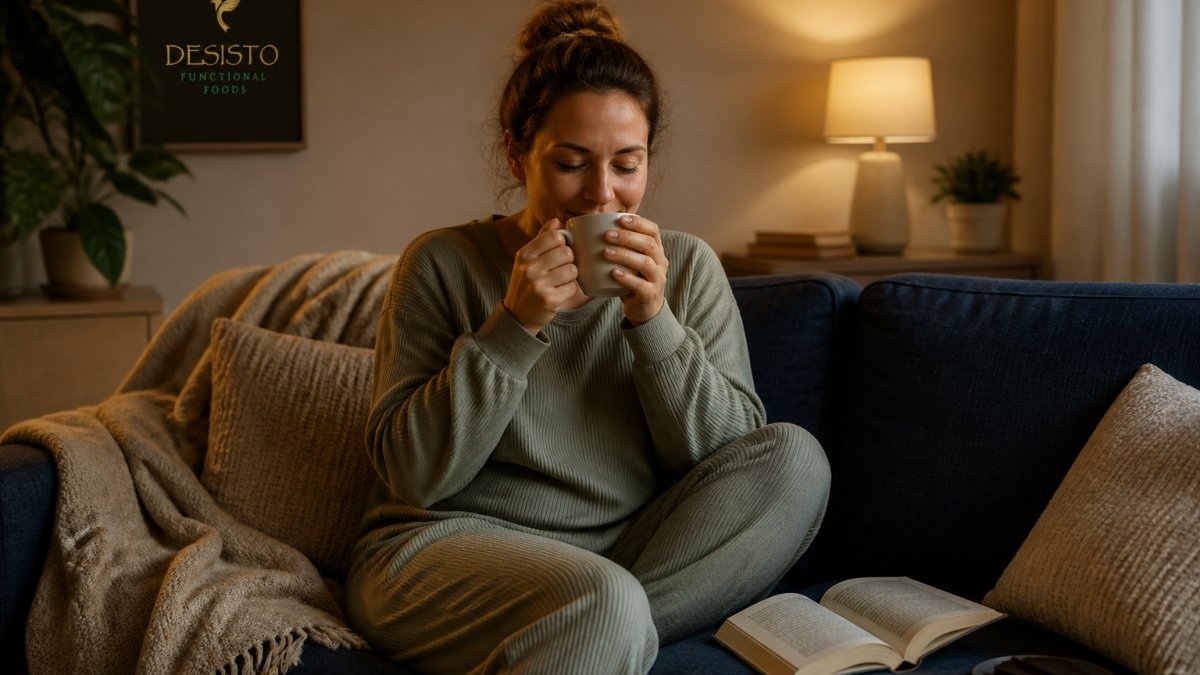
Timing tips that actually help:
- Drink it as part of a wind-down routine, not while answering email
- Keep the cup small if you wake up to use the bathroom
- Pair it with dim lights and no screens
Do not drink a large mug right before lying down. Hydration matters, but a full bladder at 3 a.m. undoes the point.
Matching the Right Tea to Your Sleep Concern
Match the tea to what is actually keeping you up, and you will get better results.
| Your sleep concern | Best herb to try | Why it fits |
|---|---|---|
| Racing mind, mild anxiety | Chamomile or lemon balm | Calming, gentle, easy to drink nightly |
| Trouble falling asleep | Valerian root or passionflower | Traditionally used for sleep onset |
| Restlessness and tension | Lavender | Soothing, often used for anxiety |
| Jet lag and travel | Chamomile or lemon balm | Portable, caffeine-free, easy ritual |
| Sensitive to strong tastes | Chamomile or rosehips | Mild, floral, easy to sip |
If you want the ritual without steeping and measuring, a single-serve option can help. DeSisto Functional Foods makes SleepDeep Dark Chocolate Squares, which combine chamomile, lemon balm, melatonin, and L-theanine in one square.
A square is not a replacement for a good cup of tea. If you are curious how the ingredients work, the NIH fact sheet on melatonin explains the basics.
Frequently Asked Questions
What is the strongest herbal tea for sleep?
Valerian root tea is often considered the strongest herbal tea for sleep because of its sedative effects. Clinical studies suggest it may reduce sleep onset time, though results vary and it can take two to four weeks of consistent use to notice benefits. Chamomile and passionflower are milder but have better safety profiles for nightly use. If you need something fast-acting, a blend combining valerian with lemon balm or passionflower tends to work better than any single herb alone.
Does chamomile tea help you sleep?
Chamomile tea has mild calming effects that can support relaxation before bed. Research on chamomile for sleep shows modest improvements in sleep quality, particularly for people dealing with mild sleep disturbances. It contains apigenin, a compound that binds to certain receptors in the brain associated with drowsiness. Chamomile works best as part of a consistent nighttime routine rather than a one-time fix. It is generally safe for regular use, though people allergic to ragweed should avoid it.
Is valerian tea safe to drink every night?
Valerian root tea is generally considered safe for short-term nightly use, typically up to four to six weeks. Some people report mild side effects like headaches, dizziness, or digestive discomfort. Valerian can interact with sedatives, anti-anxiety medications, and certain antidepressants, so check with a healthcare provider if you take prescription medication. Avoid combining it with alcohol. If you want to use it long-term, take breaks periodically to assess whether you still need it.
When should you drink tea before bed?
Drink your sleep tea 30 to 60 minutes before bed. This gives the active compounds time to take effect while giving your body time to process the liquid so you are not waking up for bathroom trips. Valerian root typically needs 30 to 45 minutes to kick in, while chamomile and lemon balm act faster. Avoid drinking tea right before lying down, and keep your total evening fluid intake moderate if nighttime urination is already an issue for you.
Herbal tea can support better sleep, but it works best as one piece of a calm routine. If steeping and timing feel like one more task at the end of a long day, DeSisto Functional Foods offers a simpler path. SleepDeep Dark Chocolate Squares pair clinically studied ingredients like chamomile, lemon balm, and L-theanine in a single-serve square, made in an allergen-safe facility and sourced through the Cultivate Better Cacao program. Shop now and make winding down the easiest part of your night.