
Table of Contents
- Why Food Affects How Calmly You Sleep
- Foods That Help You Sleep: The Strongest Evidence
- Flax Seeds and Sleep: Small Serving, Real Nutrients
- Foods to Eat Before Bed: Timing, Portions, and Snack Ideas
- What to Avoid Eating Before Bed
- When Food Is Not Enough: Realistic Expectations and Next Steps
- Frequently Asked Questions
Last Updated: October 17, 2026
Why Food Affects How Calmly You Sleep
What you eat in the hours before bed can shape how quickly you fall asleep and how rested you feel the next morning. Foods that support calm sleep work by supplying compounds your body already uses to build melatonin and serotonin, the signals that guide your sleep-wake cycle. At DeSisto Functional Foods, we built our entire product line around that idea: give the body the nutrients it needs, in a form people actually enjoy.
The connection is not mysterious. Your nightly rest depends on a chain of nutrients, and food is one of the most direct ways to supply them.
The Nutrients Behind a Calmer Nightly Rest
Several nutrients do the heavy lifting when it comes to sleep quality. Tryptophan is an amino acid that the body converts into serotonin, which then becomes melatonin, the hormone that regulates your sleep cycle. Magnesium and potassium help relax muscles and steady nerve activity. Calcium supports the brain's use of tryptophan. None of these are exotic. They show up in ordinary foods you may already have in the kitchen.
The catch is that timing and portion size matter as much as the nutrient itself. A heavy meal at 9 p.m. can keep you up even if every ingredient on the plate is sleep-friendly.
Foods That Help You Sleep: The Strongest Evidence
Among the many foods that help you sleep, a handful have the most consistent support. These are the ones worth building an evening routine around. But before you stock the pantry, it helps to know how strong the evidence actually is for each one, because the gap between "contains a sleep-related nutrient" and "has been shown to improve sleep in people" is wider than most listicles admit.
How Strong Is the Evidence, Really?
It helps to sort these foods into three rough tiers.
- Moderate human evidence: Tart cherries and kiwi have the most direct human study support. Small trials have reported modest improvements in sleep time or sleep efficiency, though sample sizes tend to be small and results are not always replicated.
- Mechanistic support (nutrient is present, sleep effect not firmly established): Bananas, oats, dairy, nuts, and seeds contain tryptophan, magnesium, potassium, or calcium, all of which play roles in sleep biology. That does not mean eating them reliably improves sleep, only that the nutrients are plausibly relevant.
- Traditional or anecdotal: Warm milk, herbal teas, and similar rituals may help partly through routine and relaxation rather than any single compound.
A reasonable expectation is that food nudges sleep quality over weeks, not that a single snack knocks you out. Anyone promising otherwise is overselling.
Tart Cherries, Kiwi, and Other Melatonin Sources
Tart cherries are one of the few foods that naturally contain melatonin, and concentrated tart cherry juice has become a popular evening drink for that reason. A typical studied serving is around 8 ounces of juice or about 1 cup of fruit, taken once or twice daily. Kiwi is another fruit that appears in sleep research; a commonly cited protocol is two kiwis about an hour before bed.
Other foods with measurable melatonin include walnuts, some mushrooms, and certain grains, but the amounts are small and vary widely by variety and growing conditions. Do not expect a food's melatonin content to match a supplement dose.
Bananas, Nuts, Seeds, and Tryptophan-Rich Options
Oats and oatmeal supply complex carbohydrates that can help tryptophan reach the brain more efficiently, which is why a small bowl of whole grains is a common evening choice. A half-cup cooked serving is a sensible portion.
Dairy deserves its own mention. Warm milk, yogurt, and cottage cheese all provide tryptophan and calcium, the classic pairing behind the old glass-of-milk-before-bed habit. A cup of milk or a small container of yogurt is the usual serving.
Flax Seeds and Sleep: Small Serving, Real Nutrients
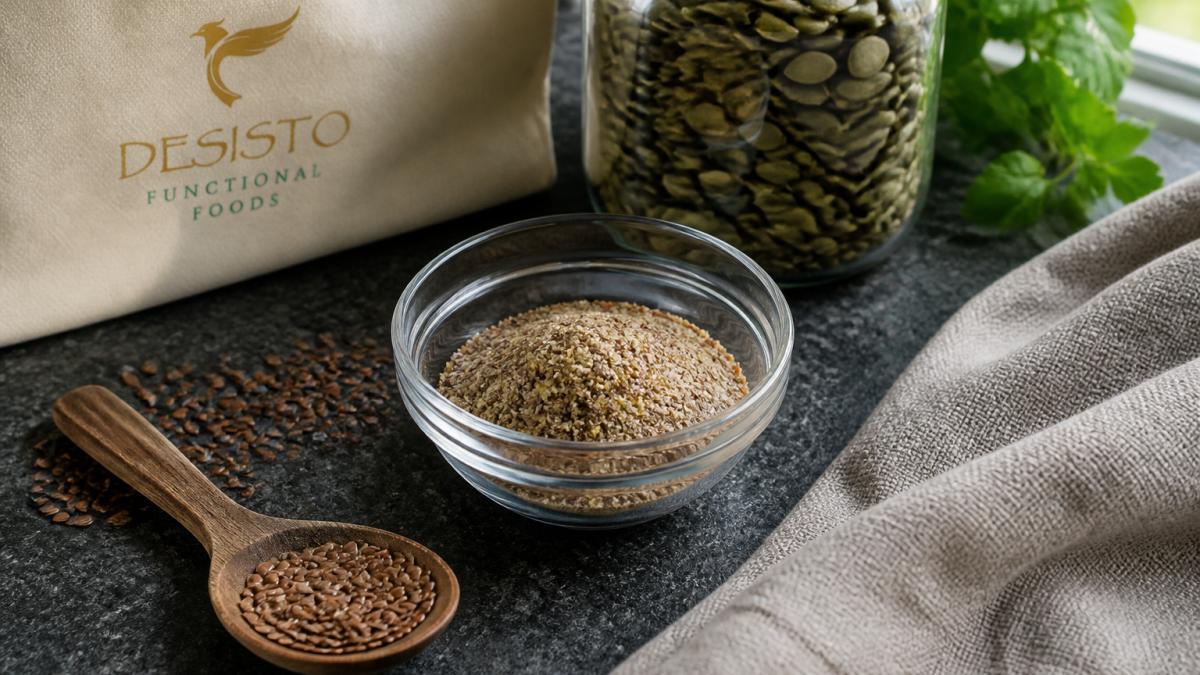
Flax seeds and sleep connect through magnesium, omega-3 fatty acids, and a small amount of tryptophan. The serving size is tiny, a tablespoon or two of ground flax stirred into yogurt or oatmeal, but the nutrient density is high.
What most guides miss is that flax is a supporting player, not a standalone remedy. It works best alongside other magnesium-rich foods rather than as the centerpiece of your evening routine.
Foods to Eat Before Bed: Timing, Portions, and Snack Ideas
The best foods to eat before bed are light, nutrient-dense, and eaten 60 to 90 minutes before you lie down. Timing matters because digestion slows sleep onset when your stomach is still working hard.
A practical evening snack combines a tryptophan source with a small carbohydrate:
SleepDeep Dark Chocolate Squares →
- Half a banana with a tablespoon of pumpkin seeds
- A small bowl of oatmeal with a spoon of ground flax
- Plain yogurt with a few tart cherries
- A small square of dark chocolate with herbal tea
Portion control is where most people go wrong. A snack is roughly 150 to 200 calories, not a second dinner. The goal is to take the edge off hunger without loading your system.

How Late Is Too Late for an Evening Meal?
Finish your last full meal at least two to three hours before bed. If you are genuinely hungry closer to bedtime, keep it to a small snack rather than a meal. Large, fatty, or spicy dishes sit in the stomach longer and can trigger reflux when you lie down.
What to Avoid Eating Before Bed
Just as some foods calm the system, others work against it. The list of what to avoid eating before bed is short, but the reasons behind each item matter more than the list itself, because the same food can help or hurt depending on when and how much you eat it.
- Caffeine in coffee, tea, soda, and chocolate can linger for hours. Caffeine's half-life in adults is commonly around 5 hours, meaning a 3 p.m. cup may still be half-active at 8 p.m. and a quarter-active at 1 a.m. For most people, cutting caffeine after early afternoon is the single highest-impact change.
- Alcohol feels sedating at first but fragments sleep later in the night and reduces deep sleep. A common pattern is falling asleep quickly, then waking around 2 or 3 a.m. and struggling to return to sleep.
- Heavy, fatty, or spicy meals slow digestion and raise the odds of heartburn when you lie down. This is a timing problem as much as a food problem: the same meal eaten at 5 p.m. is usually fine.
- Large amounts of sugar can spike and crash blood sugar, and for some people that crash coincides with an early-morning wake-up.
- Too much fluid right before bed means middle-of-the-night bathroom trips. Front-load hydration earlier in the day instead of cutting fluids overall.
A common mistake is treating a nightcap as a sleep aid. It is closer to the opposite.
The Whole Day Matters More Than the Last Hour
Evening choices get the attention, but daytime patterns often drive sleep more than any single bedtime snack.
- Caffeine timing matters more than total caffeine for most people. A morning cup is rarely the problem; an afternoon energy drink usually is.
- Meal timing sets the rhythm. Eating dinner at a consistent time helps your body anticipate the wind-down that follows.
- Alcohol in the evening has an outsized effect compared with alcohol at lunch, because the metabolizing byproducts peak during the second half of the night.
- Hydration should be front-loaded. Aim to get most of your fluids before early evening, then taper.
A Word on Supplements and Interactions
Concentrated versions of sleep-friendly foods are not automatically safer than the foods themselves. Tart cherry juice, tart cherry supplements, magnesium powders, and melatonin products can interact with medications or health conditions.
- Melatonin supplements may interact with blood thinners, immunosuppressants, and some blood pressure medications. They are not appropriate for everyone.
- Magnesium supplements can interact with certain antibiotics, diuretics, and heart medications, and high doses can cause digestive upset.
- Tart cherry products can affect how some drugs are metabolized, similar to grapefruit juice.
- Herbal ingredients such as valerian, St. John's wort, and kava have documented interactions with prescription drugs.
If you take prescription medication, are pregnant or nursing, or manage a chronic condition, check with a clinician or pharmacist before adding a concentrated sleep product to your routine. A food-first approach is generally lower risk, but "natural" does not mean "no interactions."
When Food Is Not Enough: Realistic Expectations and Next Steps
Food can support calm sleep, but it cannot fix a sleep disorder. If you have tried consistent timing, sensible portions, and the right nutrients for several weeks and still struggle, the issue may sit outside the kitchen.
Set realistic expectations. Dietary changes tend to nudge sleep quality rather than transform it overnight. For occasional restlessness, jet lag, or a racing mind after a stressful day, a simple nightly ritual can help signal to your body that wind-down has begun.
That is the gap our SleepDeep Dark Chocolate Squares are built to fill. Each single-serve square pairs dark chocolate with chamomile, lemon balm, melatonin, and L-theanine, so you get a calming routine without pills or powders.
Frequently Asked Questions
Do flax seeds help you sleep?
Flax seeds contain magnesium, which supports muscle relaxation and nervous system function, and small amounts of tryptophan, the amino acid your body uses to make serotonin and melatonin. They are not a sedative and will not knock you out on their own, but a spoonful stirred into yogurt or oatmeal as part of an evening snack adds sleep-relevant nutrients. Grind them for better absorption, and keep the portion small so digestion stays easy before bed.
What should I eat to calm down before bed?
A small snack pairing a tryptophan source with a complex carbohydrate works well: a banana with a spoonful of peanut butter, plain yogurt with pumpkin seeds, or oatmeal with a few tart cherries. Keep it under about 200 calories and finish it 60 to 90 minutes before lights out. A single-serve dark chocolate square with chamomile, lemon balm, melatonin, and L-theanine can serve as a simple, no-prep alternative when you do not want to assemble anything.
How long before bed should I stop eating?
Most people do best finishing a full meal two to three hours before bed and keeping any late snack to 60 to 90 minutes before sleep. Large, heavy meals close to bedtime can trigger reflux and make it harder to fall asleep. If you are genuinely hungry at 10 p.m., a small, low-fat, low-sugar snack is better than going to bed uncomfortable, since hunger itself disrupts nightly rest.
Can food alone fix ongoing sleep problems?
Food supports calm sleep, but it is not a treatment for chronic insomnia or diagnosed sleep disorders. If you have struggled to sleep for more than three nights a week for three months, or you snore heavily, gasp, or wake unrefreshed despite enough time in bed, talk to a healthcare provider. Dietary changes and a consistent evening routine are useful additions to medical care, not replacements for it. Ask your provider or pharmacist about interactions if you take prescription medication.
Sleep rarely improves through willpower alone. It improves through small, repeatable signals that tell your body the day is over. If you want a nightly ritual that is genuinely enjoyable and built on ingredients chosen for how they support rest, DeSisto Functional Foods makes it simple: one square, no preparation, no pills. Shop now and give your evenings a calmer finish.