
Table of Contents
- Why Timing and Food Choice Matter for Bedtime Snacks
- Foods That Help You Sleep: Nutrients That Support Rest
- Protein and Carbohydrate Combinations for Better Sleep
- Cottage Cheese Before Bed and Other Dairy Options
- What Not to Eat Before Bed: Foods That Disrupt Sleep
- How Long Before Bed Should You Eat: Timing and Portion Guidance
- A Simple Evening Ritual: Making Bedtime Snacks Work for You
- Frequently Asked Questions
Last Updated: October 21, 2026
Why Timing and Food Choice Matter for Bedtime Snacks
The right bedtime snack can mean the difference between tossing all night and waking refreshed. Most people get it wrong: they either skip eating before bed or grab whatever's convenient.
What you eat before sleep affects how quickly you fall asleep and how deeply you rest. Certain foods trigger calming neurotransmitters; others stabilize blood sugar so you don't wake up hungry at 2 a.m.
The right evening ritual can transform sleep quality. The key is knowing which foods support rest and when to eat them.
Portion size matters too. A bedtime snack isn't dinner, keep it light enough that digestion doesn't work overtime while you sleep.
Foods That Help You Sleep: Nutrients That Support Rest
Certain nutrients actively support better sleep. Tryptophan helps your body produce serotonin and melatonin. Calcium works with tryptophan to enhance this. Magnesium relaxes muscles and calms the nervous system. Carbohydrates help tryptophan cross the blood-brain barrier (pubmed.ncbi.nlm.nih.gov). The best bedtime snacks for sleep combine these nutrients strategically.
Tryptophan-rich foods include turkey, chicken, eggs, cheese, and nuts, the foundation of most sleep-supporting snacks. But tryptophan alone isn't enough; you need carbohydrates, which trigger insulin release, clearing competing amino acids so tryptophan has a clear path to your brain.
Calcium appears in dairy, fortified plant-based milks, and leafy greens, and partners with tryptophan to enhance sleep quality. Greek yogurt combines both, making it one of the most efficient bedtime snacks for sleep. Magnesium calms your nervous system directly and appears in nuts, seeds, whole grains, and dark chocolate.

Protein and Carbohydrate Combinations for Better Sleep
The most reliable bedtime snacks pair a tryptophan-containing protein with a slow-digesting carbohydrate. Protein supplies tryptophan, and carbohydrates prompt insulin release that clears competing amino acids so tryptophan can reach the brain. No single snack cures poor sleep, treat these pairings as comfort-and-hunger tools within good sleep hygiene, not insomnia treatments.
| Combination | Serving | Protein (approx.) | Fiber (approx.) | Added sugar | Notes |
|---|---|---|---|---|---|
| Whole-grain toast with almond butter | 1 slice + 1 tbsp | 5-6 g | 3-4 g | 0-1 g | Choose bread with 2+ g fiber per slice |
| Oatmeal with walnuts and milk | ½ cup dry oats + 1 tbsp walnuts + ¼ cup milk | 7-8 g | 4-5 g | 0 g | Cook with water and add milk for creaminess |
| Whole-grain crackers with cheese | 4-5 crackers + 1 oz cheese | 7-8 g | 2-3 g | 0-1 g | Watch sodium; choose lower-sodium crackers |
| Banana with almonds | 1 medium + 15 almonds | 4-5 g | 4-5 g | 0 g | Natural sugars in banana are fine in this portion |
| Greek yogurt with berries | ¾ cup plain + ½ cup berries | 15-18 g | 2-3 g | 0 g | Pick unsweetened yogurt; add cinnamon instead of honey |
| Cottage cheese with peach | ½ cup + ½ peach | 12-14 g | 1-2 g | 0 g | Casein digests slowly; good if you wake hungry |
Portion guidance: Aim for roughly 150-250 calories and at least 5-10 g protein. Larger snacks can provoke reflux when you lie down; snacks with no protein or fiber, like plain crackers or juice, spike blood sugar and leave you hungry within hours.
Dietary substitutions that keep the protein-carb pairing intact
- Dairy-free: Use fortified soy yogurt or coconut yogurt with added protein, paired with a banana or whole-grain toast. Soy milk is the closest plant-based match for protein; almond and oat milks are usually much lower unless fortified.
- Vegan: Hummus with whole-grain pita, edamame with a small orange, or a soy-yogurt parfait with berries. Tofu contains tryptophan and works in a small savory snack.
- Gluten-free: Rice cakes with nut butter, gluten-free oats with walnuts, or Greek yogurt with berries. Check labels for certified gluten-free oats if you have celiac disease.
- Nut-free: Sunflower seed butter on toast, pumpkin seeds with a banana, or yogurt with berries. Seed butters provide similar protein and magnesium without the allergen.
- Lower-sugar: Skip honey and granola; use plain yogurt with cinnamon and berries, or toast with nut butter and apple slices. Added sugar at bedtime isn't automatically harmful, but it can contribute to a blood-sugar swing in some people.
If you have diabetes or take medication that affects blood sugar, discuss nighttime snacks with your clinician, the carbohydrate portion and timing may need adjustment.
Cottage Cheese Before Bed and Other Dairy Options
Cottage cheese before bed is underrated. Its casein protein digests slowly, providing a steady stream of amino acids through the night. A half-cup serving has about 12 grams of protein and significant calcium.
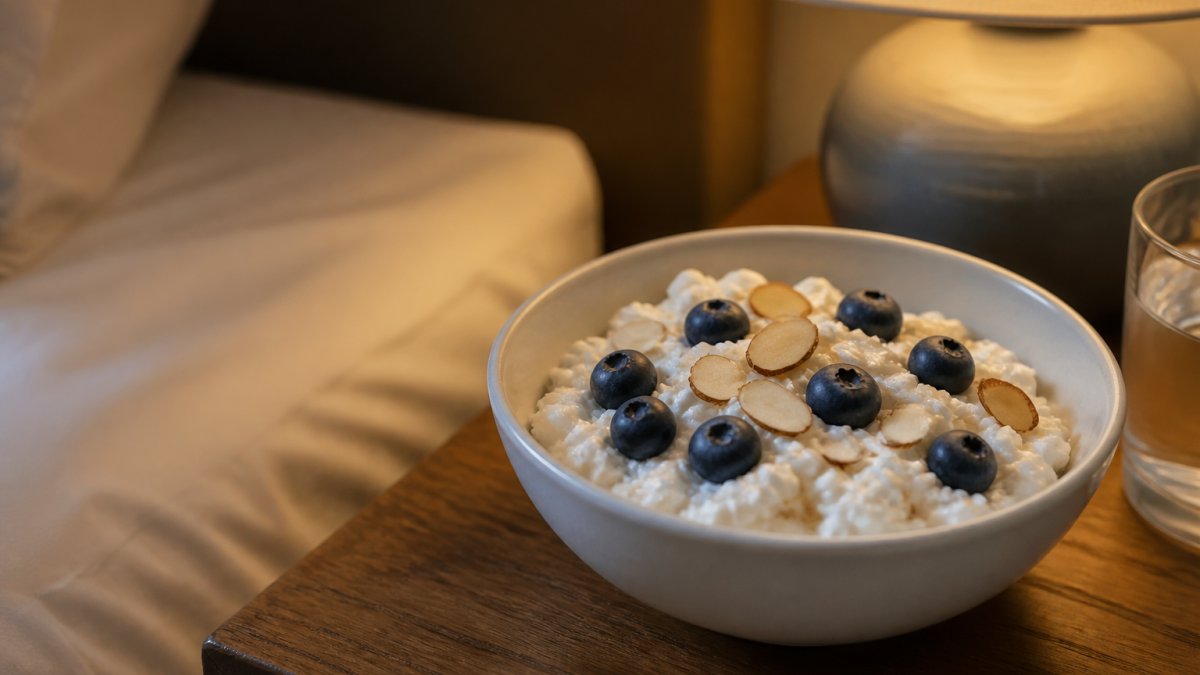
Other dairy options work well too:
- Nonfat milk or fortified plant-based milk: A warm glass of milk before bed is traditional for a reason, it contains tryptophan and calcium. Heat it gently; warm milk is more soothing than cold.
- Greek yogurt: Higher in protein than regular yogurt, making it more effective for sleep support. Choose unsweetened varieties and add your own fruit.
- Cheese: A small serving with whole-grain crackers provides protein and carbohydrates in the right ratio.
- Kefir: A fermented dairy drink rich in protein and probiotics, with a mild tang many find satisfying before bed.
The common thread: these dairy options provide both tryptophan and calcium, a combination specifically effective for better sleep.
If you're lactose intolerant or prefer plant-based options, fortified soy or almond milk work, look for added protein and calcium to match dairy's sleep-supporting profile.
SleepDeep Dark Chocolate Squares →
What Not to Eat Before Bed: Foods That Disrupt Sleep
Alcohol might help you fall asleep initially, but it disrupts REM sleep later in the night (The effect of alcohol on subsequent sleep in healthy adults).
Large meals within 2-3 hours of bedtime demand digestive effort, so your body can't fully relax. Eat dinner earlier and keep your bedtime snack light.
Chocolate deserves special mention. While dark chocolate contains sleep-supporting compounds, milk chocolate and chocolate with caffeine can keep you wired. If you choose chocolate before bed, make it dark and unsweetened.
How Long Before Bed Should You Eat: Timing and Portion Guidance
There is no single correct time to eat before bed. A 30-60 minute window works for many people, but the better question is why you are hungry. The guidance below separates common reasons for nighttime hunger, because a post-workout snack and a habitual craving call for different choices.
Match the snack to the reason you are hungry
- Post-exercise hunger (evening workout): You may need closer to 200-300 calories to support recovery. A small bowl of oatmeal with milk, or Greek yogurt with a banana, fits. Eat within about an hour of finishing exercise, then keep the pre-bed snack light if you're still hungry later.
- Missed or early dinner: A slightly larger snack (200-250 calories) with protein and fiber can prevent overnight hunger, cottage cheese with fruit or whole-grain toast with nut butter. Avoid treating this as a second full meal.
- Habitual late-night craving: If you are not physically hungry, a smaller, lower-calorie snack (100-150 calories) and a consistent routine may be enough. A warm drink and a few almonds, or a small yogurt, can satisfy the habit without adding a large calorie load close to sleep.
- Waking hungry in the middle of the night: This often signals that your evening snack lacked protein or fat. Add a slow-digesting protein, cottage cheese, Greek yogurt, or nuts, and keep the portion moderate.
Timing adjustments for comfort and conditions
- Reflux or heartburn: Eat at least 2-3 hours before lying down, and keep the snack low in fat, spice, and acid. A banana or plain toast may sit better than tomato-based or fried foods. If reflux is frequent, talk with a clinician.
- Diabetes or blood-sugar concerns: Timing and carbohydrate amount matter more than the specific food. A snack with protein and fiber, eaten at a consistent time, is easier to manage than a sugary one. Follow your care team's guidance.
- Medications: Some are best taken with food and some interact with dairy or specific nutrients. Check the label or ask a pharmacist whether your bedtime snack affects absorption.
- Food allergies: Keep the snack free of your allergen and check labels for cross-contamination warnings, especially with nuts, dairy, and gluten.
A practical portion guide
| Snack | Portion | Approx. calories | Best for |
|---|---|---|---|
| Plain Greek yogurt with berries | ¾ cup + ½ cup berries | 150-180 | General hunger, protein needs |
| Whole-grain toast with nut butter | 1 slice + 1 tbsp | 180-220 | Sustained energy, post-exercise |
| Cottage cheese with fruit | ½ cup + ½ cup fruit | 150-180 | Waking hungry overnight |
| Banana with almonds | 1 medium + 15 almonds | 180-210 | Quick plus slow energy |
| Warm milk with a small amount of honey | 8 oz + 1 tsp | 120-150 | Habitual craving, comfort |
| Hummus with whole-grain pita | 2 tbsp + ½ pita | 150-180 | Dairy-free, vegan option |
These are general guidelines, not medical advice. If you have a chronic condition, take prescription medication, or are pregnant, ask your clinician how bedtime snacks fit your situation.
A Simple Evening Ritual: Making Bedtime Snacks Work for You
The most effective bedtime snacks for sleep become part of a ritual. Consistency beats perfection.
The ritual becomes a cue for sleep. Your body learns that this snack means rest is coming. For busy professionals and frequent travelers, preparation is key: pre-portion nuts, buy individually wrapped cheese, keep shelf-stable milk on hand.
Many people find that adding a functional element to their bedtime snack amplifies the effect. DeSisto Functional Foods offers SleepDeep Dark Chocolate Squares, which combine premium dark chocolate with clinically studied ingredients like chamomile, lemon balm, melatonin, and L-Theanine.
Make your bedtime snack routine so easy and enjoyable that you stick with it. Consistency beats perfection every time.
Getting better sleep starts with what you eat and when you eat it. If you're looking for a convenient, clinically formulated option that eliminates guesswork, SleepDeep Dark Chocolate Squares from DeSisto Functional Foods provide chamomile, lemon balm, melatonin, and L-Theanine in a single-serve square.
Frequently Asked Questions
What's the best healthy bedtime snack for sleep if I'm traveling frequently?
Portable, shelf-stable options work best for travelers. Nuts, seeds, dried fruit, and dark chocolate squares are convenient choices that don't require refrigeration. If your sleep schedule shifts across time zones, melatonin-containing foods or supplements can help reset your circadian rhythm. Pack single-serve items so you're not tempted to overeat, and aim for 100-150 calories about 30-60 minutes before sleep.
How long before bed should you eat a snack to actually fall asleep faster?
Eat your bedtime snack 30-60 minutes before sleep. This timing allows your body to begin digestion while giving calming nutrients like tryptophan and melatonin time to take effect. Eating too close to bedtime may cause discomfort or indigestion, while eating too early won't provide the sleep-supporting benefits when you need them most.
Will eating chocolate before bed keep me awake, or can it actually help me sleep?
Dark chocolate with minimal sugar won't keep you wired. The caffeine content in dark chocolate is low compared to coffee or tea, and when paired with sleep-supporting ingredients like melatonin, chamomile, or L-theanine, it can actually support relaxation. Choose unsweetened or lightly sweetened dark chocolate to avoid blood sugar spikes that might interfere with sleep.
Is cottage cheese before bed a good choice, and what makes it different from other dairy options?
Cottage cheese is an excellent bedtime snack because it's high in protein and contains casein, a slow-digesting dairy protein that provides steady amino acid release throughout the night. Pair it with fruit or a small amount of granola for carbohydrates to enhance tryptophan absorption. Greek yogurt and nonfat milk are equally effective alternatives if you prefer different textures or flavors.