
Last Updated: October 23, 2026
Quick Summary
Natural sleep aids without synthetic melatonin rely on ingredients like valerian, hops, L-theanine, magnesium glycinate, chamomile, and lemon balm instead of a lab-made hormone dose. Match the ingredient to your specific sleep problem, since melatonin-free options won't match melatonin's evidence for clock-shifting. Always check the Supplement Facts panel, because "melatonin-free" is not a regulated claim.
- Valerian root is typically dosed at 300-600 mg extract 30-60 minutes before bed for trouble falling asleep.
- Magnesium glycinate absorbs well and is gentler on the stomach than magnesium citrate or oxide.
- Chamomile works best as a consistent wind-down habit rather than a knockout punch.
- Dim screens 60 minutes before bed and keep a consistent wake time, even on weekends.
- Persistent insomnia three or more nights a week for three months warrants a healthcare professional.
Table of Contents
- What "Without Synthetic Melatonin" Actually Means on a Label
- Natural Sleep Aids That Work: An Evidence-Ranked Breakdown
- Magnesium for Sleep: Which Form and How Much
- Chamomile for Sleep: What the Research Shows
- L-Theanine, Glycine, and Other Calming Compounds
- Sleep Hygiene Tips That Make Any Sleep Aid Work Better
- Side Effects, Interactions, and Who Should Be Careful
- How to Choose a Melatonin-Free Sleep Aid
- Frequently Asked Questions
What "Without Synthetic Melatonin" Actually Means on a Label
If you're hunting for natural sleep aids without synthetic melatonin, the label is where most people get fooled. According to the National Center for Health Statistics sleep aid data, 12.9% of adults used a sleep aid most nights in 2024.
Here's the plain truth: "melatonin-free" is not a regulated claim. The Sleep Foundation notes there are no strict rules for using the word "natural" on supplements either. A bottle can say "natural sleep aid" and still pack 5 mg of synthetic melatonin inside.
Synthetic vs. Naturally Occurring Melatonin
Synthetic melatonin is manufactured in a lab and sold in fixed doses, usually 1 mg to 10 mg. Naturally occurring melatonin is the hormone your pineal gland makes from darkness. Tiny amounts also show up in foods like tart cherries and walnuts.
So "without synthetic melatonin" means the product relies on other ingredients, not a lab-made hormone dose. DeSisto Functional Foods offers SleepDeep Dark Chocolate Squares, which combine chamomile, lemon balm, and L-theanine.
Natural Sleep Aids That Work: An Evidence-Ranked Breakdown
Not all natural sleep aids are equal, and the research says so directly. A 2024 review by JW Yeom and colleagues found valerian, hops, and melatonin could improve sleep quality and reduce insomnia. GoodRx reports melatonin has the strongest evidence of any supplement studied.
That ranking matters. If you skip synthetic melatonin, you're choosing ingredients with thinner but real support.
How the Evidence Stacks Up by Sleep Problem
| Sleep problem | Best-supported option | Typical dose | Expected onset | Duration | Evidence strength |
|---|---|---|---|---|---|
| Trouble falling asleep | Valerian root | 300-600 mg extract 30-60 min before bed | 30-60 min | 4-6 hours | Moderate |
| Trouble falling asleep | Hops | 300-500 mg 30-60 min before bed | 30-60 min | 4-6 hours | Moderate (often studied with valerian) |
| Racing mind at bedtime | L-Theanine | 100-200 mg 30-60 min before bed | 30-45 min | 2-4 hours | Moderate |
| Racing mind at bedtime | Lemon balm | 300-600 mg extract or 1.5-4.5 g leaf as tea | 30-60 min | 3-5 hours | Limited to moderate |
| Night waking | Magnesium glycinate | 200-400 mg elemental magnesium in the evening | Days to weeks (cumulative) | Ongoing with regular use | Limited |
| Mild restlessness | Chamomile | 1-2 g flower as tea or 200-500 mg extract | 30-45 min | 2-4 hours | Limited |
| Mild restlessness | Lavender (oral or aromatherapy) | 80 mg oral oil or inhaled as needed | 15-30 min (inhaled) | 1-3 hours | Limited |
| Jet lag | Melatonin (synthetic) | 0.5-5 mg at target bedtime | 30-60 min | 4-6 hours | Strongest |
How These Ingredients May Work
- Valerian and hops are thought to act on GABA pathways, the brain's main inhibitory system, which is why they are most often studied for sleep onset.
- L-Theanine crosses the blood-brain barrier and appears to increase alpha-wave activity, promoting relaxed wakefulness rather than sedation.
- Lemon balm contains rosmarinic acid and other compounds studied for calming effects on the nervous system.
- Magnesium glycinate supports muscle relaxation and may help regulate the HPA axis; the glycine component may also lower core body temperature.
- Chamomile contains apigenin, a flavonoid that binds benzodiazepine receptors in animal studies, though human evidence is modest.
- Lavender aromatherapy is thought to act through the olfactory system on limbic structures; oral lavender oil has been studied in generalized anxiety with sleep complaints.
The takeaway: match the ingredient to your specific problem. A chamomile tea won't fix jet lag, and melatonin-free options won't match melatonin's evidence for clock-shifting. For occasional difficulty falling asleep, valerian or L-theanine are reasonable first tries. For nighttime waking, magnesium glycinate taken consistently over weeks is the more common choice, though the evidence is weaker.
Magnesium for Sleep: Which Form and How Much
Magnesium is the most popular mineral for sleep, but the form you buy matters more than the dose. Magnesium glycinate absorbs well and tends to be gentle on the stomach. Magnesium citrate works too but can loosen your bowels. Magnesium oxide is cheap and poorly absorbed.
Dosing guidance varies by product, so follow the label rather than guessing. People with kidney disease should talk to a healthcare professional before supplementing magnesium at all.
Chamomile for Sleep: What the Research Shows
Chamomile is the classic bedtime tea, and the evidence is real but modest. The 2024 review found herbal options like chamomile may support sleep quality, though results vary by study.
What chamomile does well: it fits a wind-down ritual. The act of brewing tea and slowing down signals your body that sleep is coming. That ritual effect is underrated.
L-Theanine, Glycine, and Other Calming Compounds
These amino acids and compounds calm the nervous system rather than sedating you. L-Theanine, found in green tea, promotes relaxation without drowsiness. Glycine, an amino acid, may help lower core body temperature at bedtime. GABA supplements are popular but absorb poorly.
Tryptophan and 5-HTP feed serotonin pathways, and vitamin D plays a role in sleep regulation. Each has limited direct evidence for sleep onset.
Sleep Hygiene Tips That Make Any Sleep Aid Work Better
No supplement outruns bad habits. Sleep hygiene tips are the foundation, and they're free.
- Keep a consistent wake time, even on weekends
- Dim screens 60 minutes before bed
- Keep your bedroom cool and dark
- Avoid caffeine after early afternoon
- Get morning sunlight to anchor your sleep cycle
Natural sleep aids work best when your sleep hygiene is already solid. Fix the basics first, then add support.
Side Effects, Interactions, and Who Should Be Careful
Natural doesn't mean risk-free. Valerian can cause vivid dreams and next-day grogginess in some people. Chamomile can trigger reactions in people allergic to ragweed (pubmed.ncbi.nlm.nih.gov).
Be especially careful if you are pregnant, nursing, taking blood thinners, or managing a chronic condition. Talk to a healthcare professional before starting any supplement, and never stop prescribed medication on your own.
Antihistamines like diphenhydramine and doxylamine are common over-the-counter sleep aids, but they're not natural and can cause morning fog and tolerance. They're a different category entirely.
How to Choose a Melatonin-Free Sleep Aid
Start by reading the supplement facts panel, not the front label. "Melatonin-free" is not a regulated claim, and there is no standard definition of "natural" for supplements. A bottle can say "natural sleep aid" and still contain synthetic melatonin in the ingredient list.
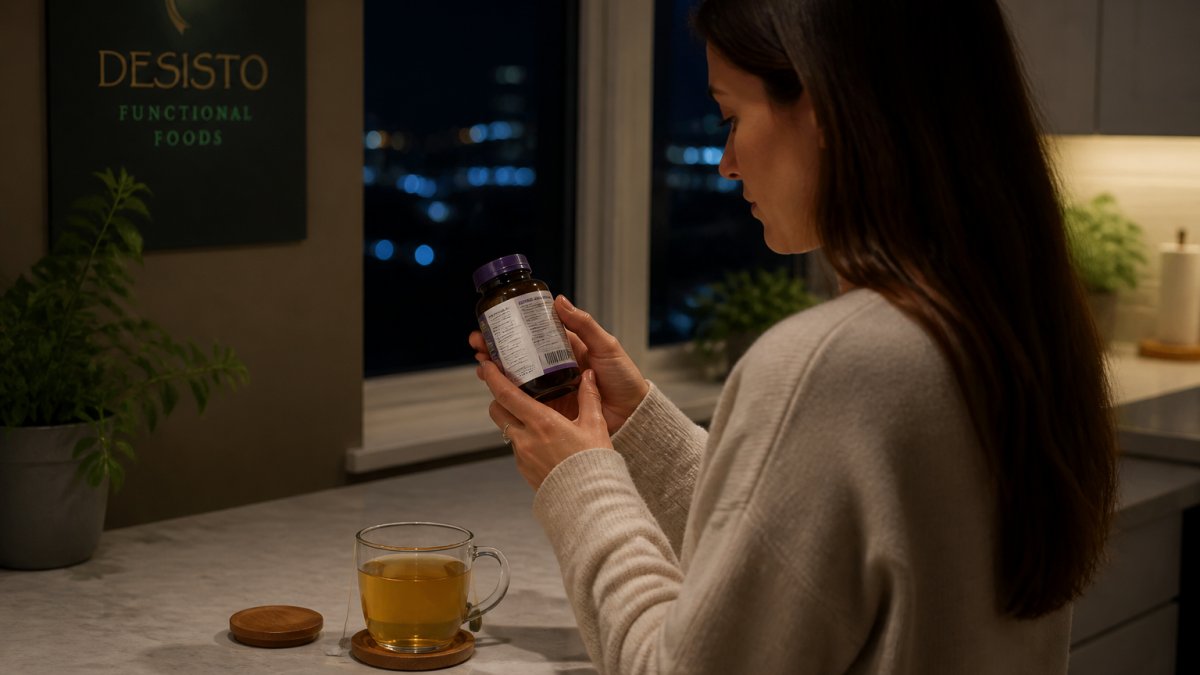
How to Spot Hidden Melatonin on a Label
- Check the Supplement Facts panel first. Melatonin must be listed there if it is an added ingredient, usually as "melatonin" in milligrams per serving.
- Read the "Other Ingredients" line. Melatonin is rarely hidden there, but proprietary blends and "sleep blends" can obscure what is inside.
- Be wary of "proprietary blend" listings. A blend can list total milligrams without disclosing individual doses, which makes it impossible to know whether melatonin is present or how much of each herb you are getting.
- Distinguish added melatonin from naturally occurring melatonin. Tart cherries, walnuts, and some grains contain small amounts of naturally occurring melatonin. A tart cherry juice product is not a melatonin supplement, but it is also not melatonin-free in the strict chemical sense. If your goal is to avoid added synthetic melatonin, check whether the product lists melatonin as an added ingredient rather than relying on the front label.
- Look for third-party testing marks. USP, NSF, and ConsumerLab verification indicate the product was tested for identity, potency, and contaminants. These marks do not guarantee melatonin-free status, but they reduce the risk of undeclared ingredients.
- Check the dose per serving, not per container. A label that says "1,000 mg valerian blend" per container may deliver far less per capsule.
A Practical Checklist Before You Buy
- Supplement Facts panel confirms no melatonin is listed
- Active ingredients match your specific sleep problem (see the evidence table above)
- Dosage is clearly stated per serving, not per container
- No proprietary blends hiding individual doses
- Third-party testing or allergen-safe manufacturing noted
- Brand discloses where ingredients are sourced
- Cautions for pregnancy, nursing, older adults, and medication interactions are stated on the label or brand site
When Self-Care Is Not Enough
If you have tried melatonin-free options for several weeks alongside basic sleep hygiene and still struggle, that is a signal to seek evaluation rather than keep stacking supplements.
This is where a product like SleepDeep Dark Chocolate Squares fits. Each single-serve square combines chamomile, lemon balm, and L-Theanine. They are made in an allergen-safe facility in the U.S.A. and eliminate the need for pills or powders.
Frequently Asked Questions
What are the best natural sleep aids without melatonin?
The strongest evidence among non-melatonin options points to magnesium, chamomile, valerian, and L-theanine, though results vary by ingredient and person. A 2024 review by Yeom and colleagues found valerian, hops, and melatonin could improve sleep quality and reduce insomnia, while the Sleep Foundation notes valerian evidence is limited. Magnesium supports relaxation and muscle function, and chamomile has mild calming effects. Start with one ingredient at a time so you can tell what actually helps your sleep onset or sleep maintenance.
Do magnesium supplements help with sleep?
Magnesium plays a role in muscle relaxation and nervous system function, which is why it shows up in so many sleep formulas. Evidence is moderate rather than overwhelming, and results depend on the form: glycinate and citrate are absorbed well, while oxide is cheaper but more likely to cause loose stools. Typical doses range from 200 to 400 mg taken 30 to 60 minutes before bed. If you take prescription medication, check with a healthcare professional first, since magnesium can interact with some antibiotics and diuretics.
Can chamomile or lemon balm help you sleep?
Both are traditional calming herbs with mild sedative properties. Chamomile contains apigenin, a compound that binds to benzodiazepine receptors in the brain, and lemon balm has been studied for reducing anxiety and improving sleep quality. Effects are gentle, not dramatic, so they suit people with mild difficulty winding down rather than clinical insomnia. A cup of chamomile tea 30 minutes before bed is a low-risk starting point. If you are pregnant, nursing, or on blood thinners, talk to a healthcare professional before using herbal supplements regularly.
When should I talk to a doctor about insomnia?
See a healthcare professional if sleep problems last more than three nights a week for three months or longer, if daytime fatigue interferes with work or driving, or if you snore heavily and wake unrefreshed, which can signal sleep apnea. The CDC reports that 12.9% of adults used sleep aids most days or every day in 2024, so persistent sleep trouble is common, but it still deserves medical attention. Natural sleep aids can support better sleep hygiene tips and a wind-down routine, but they are not a substitute for diagnosing an underlying condition.
If racing thoughts and inconsistent routines are wrecking your nights, the fix starts with a simpler ritual. DeSisto Functional Foods makes SleepDeep Dark Chocolate Squares with clinically studied ingredients, single-serve convenience, and no synthetic melatonin. Shop now and give your evenings a calmer, cleaner wind-down.
